In the third post, The Ideology of the Blockchain (for Education), Audrey Watters makes some sweeping statements:
“All digital technology is ideological. All education technology is ideological”
“Technologies, particularly the new computer and communications technologies of the twentieth century onward, help reinforce dominant ideology”
One problem with the word technology is that it both refers to a “collection of techniques, skills, methods and processes” and the technical objects, the artefacts where they are embedded.
From Wikipedia:
Technology is the collection of techniques, skills, methods and processes used in the production of goods or services or in the accomplishment of objectives, such as scientific investigation.
Ideology is a collection of doctrines or beliefs shared by members of a group. It can be described as a set of conscious and unconscious ideas which make up one’s beliefs, goals, expectations, and motivations.
For the clarity of this part of the rebuttal I will use “technical objects” to refer to artefacts and technology to refer to the “collection of techniques, skills, methods and processes.” With that being said, a blockchain is a technical object that, as any object, is subject of investigation and discourses, including ideological.
The problem with statements like “All digital technology is ideological. All education technology is ideological” is it can be applied to everything without adding an iota of understanding. Remove “digital” and you have “all technology is ideological.” Then remove “technology” and you have “Everything is ideological.” Well, so what? Continue reading

 The Open Badge Ecosystem is a conversational system, where things are not fixed once and for all. The value of credentials is not absolute, it varies across space and time, as well as with the position of the observer within the network. Looking at the dynamics of networks construction, their topology, how clusters are formed and relate to each other, will help us compute the level of confidence one might assume in making a decision based on the information provided by the network. Would the introduction of a distrust component, a Badge of Distrust (BoD), improve the quality of the decision making process? Are there potential risks associated with BoDs?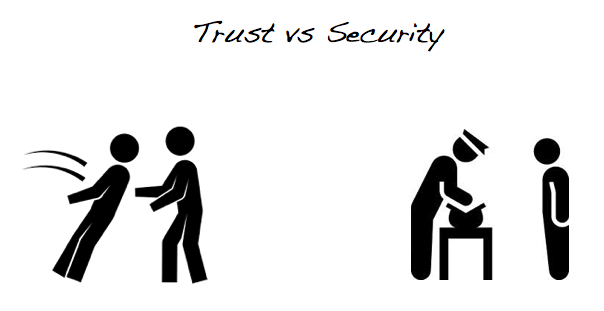
 I have lost friends whose irreverent cartoons contributed to forging my character and political views. Cabu and Wolinski were among the heros of my teenage years. Nothing was sacred to them, nothing but life! Their murder, the murder of an entire editorial board by bigots acting on behalf of a criminal organisation has transformed some of my favourite cartoonists and economist (Bernard Maris) into another kind of heros: heros of democracy and free speech.